
It’s time to turn back time! Safer Driving Tips

Sometimes we wish we could turn the clock back – I mean how can it possibly be November already?

Seriously though – once the clocks go back on Halloween – it can make the driving experience a little more ‘scary,’ not because of witches and broomsticks but because the nights draw in so much earlier.

And as the nights draw in – it’s another sign that winter is well and truly on its way.

So here are our five top tips to stay safe if you’re driving for work, during the shorter days and longer nights:

  1. If travelling early in the morning, watch out for slippery roads – ice, rain and leaves on the roads can make driving more difficult. Take your time when carrying out manoeuvre’s and always watch your speed.
  2. Clear your windscreen – don’t be tempted to head off to work without clearing your windscreen first. Anything that affects your vision in your car or van – can make driving hazardous.
  3. During the winter months, the sun is low in the sky, making dazzling more likely. Make sure the inside of your windscreen is clean and have a good pair of sun glasses handy.
  4. Check your vehicles, especially your windscreen wipers and washer fluid. They’re both even more important at this time of year because of the dirt and spray on the roads.
  5. Remember, your vehicle has bright lights so you can be easily seen, however, you must still be on the look out for vulnerable road users, those who can’t be so quite easily seen, pedestrians and cyclists in particular.

According to the RAC Foundation, road traffic collisions increased by 19 percent in the fortnight after putting the clocks back – scary eh? Taking road safety seriously is always important but even more important at this time of year as the risks increase.

We can help you keep your drivers safe and manage your driver risk. A full list of services can be found in this website.
Changes to the Highway Code

That little book that we all study when learning to drive gets updated regularly, in fact, this September the Highway Code went through some major updates, for example, clearer Motorway advice on:

  • where to stop in an emergency
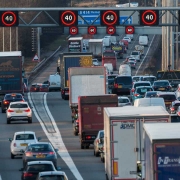
  • the importance of not driving in a lane closed by a Red X
  • how variable speed limits are used to keep traffic flowing

In total, 33 existing rules in The Highway Code have been amended and two new rules introduced. Amendments have also been made to the additional information within The Highway Code and its annexes.

The new version of the Highway Code includes a “hierarchy of road users”. A new rule makes clear that at a junction, drivers should give way to pedestrians crossing or waiting to cross a road into which or, or out of which, they are turning. 

Cyclists will have priority at junctions when travelling straight ahead but, they are expected give way to pedestrians whenever they are in shared cyclist and pedestrian locations.

Here is a summary of the two new rules:

Rule 270 – introduced to ensure motorway users understand:

  • Emergency areas are located along motorways without hard shoulders or where the hard shoulder is used some of the time as an extra lane.
  • How to recognise an emergency area
  • Emergency areas are for emergency use only

Rule 275 – introduced to ensure road users understand:

  • A place of relative safety is where the people and vehicles involved in a breakdown or other incident are less likely to be at risk from moving traffic
  • The safest place to stop in the event of a breakdown or incident is a location which is designed for parking
  • On motorways and other high-speed roads, the safest place to stop is a service area.
  • Other places of relative safety on motorways and other high-speed roads include lay-bys, emergency areas and hard shoulders
  • hard shoulders provide less protection than other places of relative safety

What implications does this have for businesses?

As a business, under Health & Safety law, the business has a legal duty of care to ensure their driving activities are not putting staff or other road users at risk. This means that a good driver risk management programme must be in place, and for any business with five or more employees, the programme must be documented.

If you would like to know more about what good driver risk management is all about, I’d love to have a chat with you, alternatively, click HERE for more information.

Useful links

Click HERE for a link to the summary of Highway Code changes

Click HERE for a link to the Official Highway Code

Click HERE for a link to the Official Highway Code for Northern Ireland

Want a paper copy of the Highway Code?

Click HERE to order a paper copy of the Highway Code

If you live or drive in Northern Ireland, I recommend buying The official highway code for Northern Ireland

Car and trailer legislation changes

The government’s plans to help to tackle the shortage of lorry drivers by creating an extra 50,000 lorry tests by stopping car and trailer testing. 

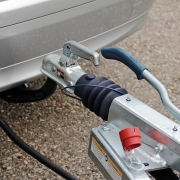
Part of the plan is to allow all car drivers to tow a trailer weighing up to 3,500kg without the need for an additional licence when the law is changed, which is expected to receive Royal Assent this Autumn (2021)

To make more lorry tests available, DVSA will not be carrying out any car and trailer tests from 20 September.

The current licence requirements for cars towing a trailer still apply until the new legislation receives Royal Assent.

Drivers who passed their car test before 1 January 1997 can already tow a car and trailer without an additional licence.

What will change later in 2021

If you passed your car driving test from 1 January 1997, you’ll be allowed to tow trailers up to 3,500kg MAM when the law changes.

DVLA will update your driving licence record to show that you’re allowed to tow trailers. You’ll get category BE added to your driving licence when you get a new photocard driving licence.

You do not need to contact DVLA for this to happen. It will be done automatically.

What you can do until the law changes

Until the law changes later in autumn 2021, you must continue to follow the current rules about what you’re allowed to tow based on when you passed your car driving test.

You can be fined up to £1,000, be banned from driving and get up to 6 penalty points on your driving licence if you tow anything heavier before the law changes.

You’re only allowed to tow anything heavier if you’re being supervised. When you’re being supervised, you must:

  • display L plates to the front of the car and the rear of the trailer
  • be accompanied by a person who’s at least 21 years old and has had category BE on their driving licence for at least 3 years

What does this mean for businesses?

This might be welcomed as good news for many, however, it must be remembered that as a business, you have a duty of care under Health and Safety legislation to ensure your staff are safe, confident and competent to use any work equipment, this will include trailers if used for work purposes. 

My advice would be to offer training to anyone who needs to tow a trailer and especially if the driver has recently acquired their full licence or has not towed before.  Most commercial vehicle training organisations will be able to offer appropriate trailer training.

Don’t forget also, make sure you have a good driver safety policy in place, one that articulates your rules for towing.

You can view the new rules HERE

Stonegate Tooling introduce a driver risk management programme

Background

Stonegate Tooling are one of the UK’s leading suppliers of tools and materials to stone fabricators, and are known as ‘the UK’s most trusted supplier’ in the industry. They also provide expert support and advice to their clients.

Challenges Faced

Stonegate are a growing company with an expanding team whose staff use company vehicles as well as their own to visit client sites.

Requirement

Stonegate wanted to ensure that as employers they were fully up to speed with health and safety legislation and as a responsible employer, they were doing all they could to protect their staff and keep them safe on the roads.

How We Helped

Adrian Hide Consultancy was brought in to assess what measures were already in place and carry out a full risk assessment to help ensure driver safety. Adrian also developed a fleet safety policy and is working with Stonegate to look at delivering an on-line driver safety course for its employees.

After the completion of the project, Stonegate commented: “We would have been lost without Adrian’s expertise. He’s really easy to work with and his knowledge is invaluable. We really liked the emphasis on risk management and the structure. It’s early days but so far staff have given us great feedback and we are now considering  working with Adrian to bring in driver safety training for our staff.”

August Bank Holiday – Safe Driving Tips

The August bank holiday is set to be the busiest time of the year with millions setting off on a staycation. This brings a much needed break for many but sadly, for some, the journey may not end as planned. 

Here are a few simple tips on safe driving, but not just for August!

R is for reading the road. If you concentrate on the driving task, you will be in a good place to read the changing road situations, and, plane a safe route through hazards.

O is for observation. Make sure you are seeing, not just looking by having an effective scanning technique, that is to scan the road well ahead, the mid and near ground, beside and behind, not forgetting blind spots.

A is for anticipation, the key to safe driving. To help you anticipate, simply ask ‘what if’ to things you see ahead. You will naturally fill in the answers which will lead to better anticipation and a more proactive driving style.

D is for distance, that is, keeping a safe distance between you and the vehicle ahead. Remember, you need a two-second gap between you and the vehicle in front on dry roads, but double that distance in the wet.

S is for speed. Speed limits exist for a reason and shouldn’t be ignored and remember, limits are not targets or a safe suggestion of speed, you must decide that based on the prevailing conditions.

A is for away. Put your mobile phone AWAY in the glove box or in a bag behind your seat. Glancing at it for even a split second could have distortions consequences. 

F is for fuel. Make sure you have enough fuel for your journey, if not plan your refelling stops, probably time for a comfort freak anyway. If you are driving an electric vehicle, plan recharging stops but have a plan b and c in case plan a is not possible.

E is for ‘extra’ care before setting off on a long journey. Use FLOWER as a reminder of what to check, FLOWER stands for: fuel, lights, oil, water, electrics, rubber (tyres and wipers)

T is for time. Make sure you allow plenty of time for your journey, and for each hazard you encounter, give yourself more time to deal with them by reducing speed, remember, space and time are your best friend!

Y is for yawning. Make sure you’re fully rested before getting behind the wheel especially if you are going to drive long distances. You should take 15-minute break every two hours. Falling asleep behind the wheel could have fatal consequences.

For more tips on how to keep your staff and drivers safe on the roads have a look at our website and don’t forget we also offer a full range of E-learning and face-to-face courses to help keep you and your staff as safe as possible. 

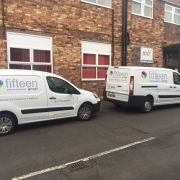
Fifteen Group to use e-learning course for all staff

Background

Fifteen Group are an award-winning telecommunication, IT and software company. Based in Stoke-on-Trent they have clients across the UK.

Challenges Faced

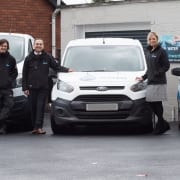
Staff use the company’s fleet of vans to travel to customer sites across the country. Staff also use their own vehicles for work purposes and are paid business mileage. Fifteen Group felt there was gap in training and wanted to ensure this was resolved.

Requirement

The company wanted to ensure all staff who drive for work purposes, were give the best training possible to keep them safe on the roads. 

How We Helped

Adrian Hide Consultancy was brought in to discuss the training options that were available, and the on-line safety course was chosen for its flexibility and to ensure Covid safety. All staff who drive for work have completed the course and it now forms part of the induction process for new starters.

Ian Walker is of the Company Director. He said: “As a company we take the health and safety of our employees very seriously, whether that’s on site or on the roads. A van is essentially a one- or two-ton piece of metal that could potentially be very dangerous if it’s not maintained or driven properly. As an employer we wanted to ensure all staff who drive as part of their job, whether they drive one of our vans or their own vehicle was given the best training. Adrian’s course provided that. It was interesting, informative and I know from the feedback that our staff have given that they learnt a lot and found it very useful.”

You Don’t Know What You Don’t Know

You don’t know what you don’t know is a phrase that gets bounded around a lot in the public sector and indeed the business world.

Its resonated loud and clear this week with us. We’ve been making calls to prospective clients about the services we offer including our on-line driver training courses and the work we do around Driver Risk Safety Policies.

Frighteningly several of the businesses we spoke to were blissfully unaware that if their staff drive as part of their role, employers have a responsibility for their safety, even if they’re driving their own vehicles.

If an employee driving for the purposes of work, makes a bad decision, say they choose to drive with bald tyres and that causes an accident, the buck won’t necessarily stop with the driver. 

Did you as an employer provide as much training as you could to make sure your staff knew and understood why it’s so important to keep their vehicles roadworthy and what else they could do to keep within the law and drive safely too?

If you have staff that drive long distances for work and are away from home for days at a time – do you have boundaries and regulations in place to help keep them safe on the roads?

If you’ve got a sales manager that covers a large area – they could be driving for miles, be behind the wheel for hours and have late finishes and early starts. They may decide that after a midnight finish, they’ll get up at 4am to beat the traffic, to travel 250 miles home to their family but if they fall asleep behind the wheel – that could be potentially fatal.

Courier drivers or those in the home delivery sector typically have tight schedules, are any of your practices putting staff at risk?  If they do, you are breaking health and safety law?

That’s where a Driver Risk Safety Policy comes in. It sets out the rules and regulations the company has in place and articulates the company’s expected standards. In that document it would outline what rest time they expect a staff member to have between business trips before they put the keys in the ignition.

Only last year one company was fined £750,000 after two of their staff died in an accident, where it was found they weren’t sufficiently rested. (https://www.examinerlive.co.uk/news/local-news/company-fined-750k-after-two-18248117)

Cars, lorries and vans can be lethal weapons – you don’t know, what you don’t know wouldn’t stand up in court if you find yourselves prosecuted under health and safety law.

Employers have a duty of care to protect their staff on the roads if they drive for work purposes. That means making sure staff get the right training and ensuring the right policies are in place.

If you’d like to know more about keeping staff safe on the roads, protecting you and your business, we can definitely help you with that.

Approach Dementia Support invest in driver training for their staff

Background

Approach Dementia Support offers offer community support across Stoke-on-Trent and Staffordshire to those living with dementia.

Challenges Faced

They have a number of support staff who provide one to one support for vulnerable people including those living with dementia. Their roles are vital in supporting them to get out and about, interact socially and to take service users out for walks, for food or to take part in hobbies including fishing. This service relies on support staff using their own vehicles to transport service users.

Requirement

The organisation wanted to ensure that staff were fully trained in using their own vehicles for work purposes, understood their responsibilities, and knew how to keep their vehicles roadworthy to help keep themselves and their services users safer.

How We Helped

Following a meeting with Adrian, it was agreed that all 18 support staff should attend an E-learning training course which would meet all of their requirements. All new starters will now undergo the training as part of their induction process.

Louise Eagle is the Head of Strategic Alliance at Approach Dementia Support. She said: “Adrian has helped us every step of the way, from understanding our specific needs to highlighting the best training for our staff. The training itself is fantastic and our team really enjoyed completing it as well as learning a lot in the process! It’s important for us to know that we are doing all we can to keep our staff and our service users safe when they’re on the roads and by bringing Adrian in, we feel that we are doing that.”

Phoenix Occupational Health – Driver Risk Management Case Study

Background

Phoenix Occupational Health are a Staffordshire based family firm.

They offer all aspects of occupational health services including management referrals, health checks and health promotions to organisations and businesses.

Owned and run by Lyndsey Marchant, they have a team of staff who travel to companies across the country to deliver these services.

Challenges Faced

There was an incident where a former member of staff had an accident on the way home from work, where he had hit a road sign. He wasn’t hurt but the car had been damaged and needed fixing. It only came to light because the incident had come up in conversation and not because the employee reported it.

Requirement

Phoenix were concerned that staff weren’t aware of the procedures they needed to follow if a similar incident happened again. They also wanted to ensure that as an employer they were doing all they could to keep staff safe on the roads and comply with health & safety legislation for managing driver risk in the workplace.

How We Helped

Adrian Hide Consultancy were brought in to formally introduce a driver risk management programme for Phoenix, this meant the creation of a risk assessment, driver safety policy and a driver safety handbook for all their staff. In addition, procedures were set up to ensure their staff and the vehicles they driver were safe and compliant.

As part of Phoenix’s investment in people, all staff have undertaken an online driver safety course, aimed at promoting safe and fuel-efficient driving.

David Marchant from Phoenix Occupational Health said: “Adrian has been fantastic, and it’s brought us real peace of mind. We know now we’re doing all we can to keep our staff safe when they’re driving for work purposes and every new team member will attend one of Adrian’s courses as part of their onboarding process.”

SAS Water – Driver Safety Case Study

Background

SAS Water are a Staffordshire based company who specialise in all aspects of Legionella control. Owned and run by Lizzie Ward, Lizzie has a team of eight engineers who drive company vans all over the country to client sites. 

Challenges Faced

Some of the drivers were getting poor ratings from the vehicle tracker systems fitted within in the vans and SAS Water wanted to address that so that they could make sure their drivers were driving as safely as possible.

Requirement

The company wanted to give the drivers all the tools and information they needed to keep themselves and other road users safe.

As an employer their aim was to be as proactive as possible to make sure their team had the best training possible.

How We Helped

Following a meeting with Adrian, Lizzie delivering an in-house training session with her staff, based on Adrian’s advice and knowledge but Lizzie wanted the training to be as comprehensive as possible. As a result, herself and the team of engineers also underwent Adrian’s on-line training specifically designed for van drivers.

All new starters now undergo the training as part of their induction/onboarding process.

Lizzie said: “Adrian’s training has been fantastic. He’s helped raise our employers awareness when it comes to being on the road, in terms of driving and van maintenance. As a business owner I want to know I am doing all I can to help keep my team safe and knowing that the drivers have been on Adrian’s course has given me peace of mind. It will also help us be legally compliant and supports us with our health and safety accreditation which is important.  I know myself and the team have learnt a lot and I would wholeheartedly recommenswd Adrian and his training. He’s a thoroughly lovely guy, extemelely knowledgeable and great to work with.”

Get in touch

Together, we can make the roads safer for everyone

Call us on 07973 337 251
Email us at hello@adrianhideconsultancy.co.uk

Safer Driving Academy is the training division of Adrian Hide Consultancy

Get in touch

Together, we can make the roads safer for everyone

Call us on 07973 337 251
Email us at hello@adrianhideconsultancy.co.uk

Contact us Privacy Policy

Safer Driving Academy is the training division of Adrian Hide Consultancy

© Copyright Adrian Hide Consultancy | Safer Driving Academy is the training division of Adrian Hide Consultancy | Website by Clyq

Contact us Privacy Policy

© Copyright Adrian Hide Consultancy | Safer Driving Academy is the training division of Adrian Hide Consultancy | Website by Clyq