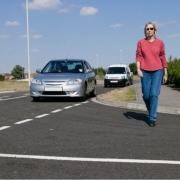
New partnership formed with Road Safety NI

Businesses in Northern Ireland can now access three online driver training courses via a newly formed partnership between Adrian Hide Consultancy and Road Safe NI.

We have three courses to offer, one for car drivers, one for van drivers, and a special Electric Vehicle familiarisation course, ideal for those moving over to electric vehicles for the first time, or, for those who just want to get the best from these amazing vehicles. We cover a whole host of topics that EV drivers need to know, meaning that they won’t be saying further down the line, ‘I wish I knew that sooner’.

Because each course is modular, participants can progress at their own pace, tackling bite-sized units one at a time. Once the course has been completed, a certificate will be automatically issued, providing evidence that the course has been done successfully.

As well as businesses being able to invest in the safety of their staff, the courses contribute towards an employer’s duty of care obligations under the health and safety law, and the Charity will benefit too because for every course purchased, Road Safe NI will receive a percentage, thereby supporting the excellent road safety work that they do.

If you are a business in NI, and you’d like to know more about our driver training courses, and a special offer that we’ve set up through Road Safe NI, please get in touch.

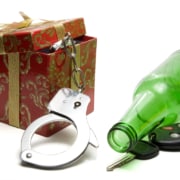
Don’t go from propping up the bar to behind bars!

The Christmas countdown is on and the festive party season is well and truly upon us.

Whether it’s a night out with work colleagues at the pub, you’re getting glammed up for the office do, or it’s a festive night out with your family – if you’re celebrating with a drink, getting a taxi or walking home, or nominating a designated driver are always the best ways to make sure you get home safely.

 We don’t want to be killjoys but getting behind the wheel when you’ve consumed alcohol is always a risk – can you be sure you’re not over the limit? Drink driving not only puts yours and other people’s lives at risk, it can carry hefty penalties, driving bans and of course a prison sentence. Is one too many at that family festive bash, really worth ruining Christmas and so much more?

The chances of getting breathalysed at this time of year will undoubtedly increase – especially with the World Cup in full swing. According to Road Safety GB, police across England and Wales breathalysed more than 37,000 drivers last December – that’s more than twice the average for the other months of the year. Last December, their figures show that a total of 3,840 drivers tested positive (or refused to provide a sample) – a failure rate of more than 10%.

Let’s not forget alcohol affects everyone differently. One person could have four pints of medium-strength lager and not tell they’ve had it (obviously they shouldn’t drive though), another could have a glass of Christmas Cosmo and it goes straight to their heads. If in any doubt don’t drive – either drink and don’t drive, or don’t drive and drink – then you know exactly where you are.

The time alcohol stays in your system really varies too. It depends on a variety of factors, including your age, weight, sex, and metabolism, the kind of alcohol you’ve drunk, how much you’ve drunk and over what time-period as well as what you’ve had to eat.

Just because you’ve slept, after a night out on the town, doesn’t mean all the alcohol you drank has left your system. There’s a realistic chance that you could still be well over the limit the morning after the party the night before.

Let’s look at how it works  – on average it takes an hour for one unit to leave your body. Even if you’ve had a good eight hours’ sleep and don’t feel hungover it can still be in your bloodstream.

And there’s absolutely nothing you can do to speed up the process – contrary to popular belief, a massive mug of coffee might make you feel slightly better the next morning, but it won’t make any difference to how much alcohol is still in your system. The only thing that can help you is time. If you’re under any doubt whatsoever the next morning, don’t risk it by getting behind the wheel.

Don’t forget the rules around drugs driving too: https://www.gov.uk/drug-driving-law

Having said all this – we won’t want to put a dampener on you enjoying the Christmas period – we just want you to be aware of dangers so that you can hit the town and get home safely.

Have an amazing Christmas and New Year – we hope you have an incredible festive season and one that’s happy, healthy and safe.

Don’t forget we can help you keep your drivers’ safe and manage your driver risk. For a full list of services and to see the training we offer please go to: www.adrianhideconsultancy.co,uk

Brake Road Safety Week

Today marks the start of Road Safety Week – with the theme being Safe Roads for All.
And in our line of work – it’s important as it brings together communities and professionals to champion keeping our roads safe for everyone.

Stay safe in the dark

Did you know that four out of ten collisions happen at night? That’s according to the Royal Society for the Prevention of Accidents (ROSPA).

With the nights drawing in and the clocks having gone back you may find that more of your workforce are driving at in less than perfect conditions – so we thought we’d share some of our top tips for driving in the dark to help keep them safe.

Take a Rest

If you’re driving long distances with work, it’s vital you stop and take a break.

Tiredness can lower you concentration levels and slow your reaction times. Driving in the dark can increase the risk.

If you’re opening the window to try and stay awake you definitely need to be pulling over for a rest.

Plan ahead and try and rest for at least 15 minutes every two hours. As the very well know phrase goes: “Tiredness can kill, take a break.”

Keep an Eye on Your Vision

Did you know that you must be able to read a UK number plate from 20 metres away. If you can’t and you’re caught behind the wheel you could end up having your licence taken off you.

If you’re struggling to read a number plate from that distance – it’s time to book in with your optician and get your eyes checked.

The NHS recommends that you have your eyes tested every two years to make sure there have been no changes.

Car Maintenance is Key

The night’s drawing in – normally goes hand in hand with the weather getting worse.

Make sure your screen-wash is topped up so that if grime from the road does hit your windscreen you can clear it quickly without risking your visibility.

No-one wants to break down but breaking down in the winter in the dark can be even worse so make sure your car or van is serviced annually to try and avoid costly breakdowns.

Stick to the Speed Limit.

You should always stick to the speed limit and in the dark it’s much better to give yourself extra time to react.

Going that little bit slower will help you keep an eye out for any potential hazards including cyclists, dog walkers, wildlife or pedestrians wanting to cross the road as well as giving you more time to take action if needed.

Watch Your Lighting

Today’s vehicles are fitted with so much technology – it can be easy to just press the start button and go without benefitting from it.

Make sure everything’s set to what it should be – especially your lights, and remember, auto on/off lights will not operate in daytime fog, snow or rain, you must turn them on manually!

The glare from oncoming traffic’s headlights can be a distraction – avoid looking into them directly and look at the left-hand side of the road instead. You can also check your beam alignment too so you’re not momentarily blinding oncoming traffic.

If you find the glare of the screen display too much too – most modern cars have the ability to dim it.

If you have staff that drive for work purposes don’t forget under health and safety legislation you have a duty of care to help keep them safe. We can work with you to give them the right training to help reduce the risks on the roads. To find out more about the training we deliver please take a look at our website Training page.

200 miles in my EV

It’s not uncommon for people to talk about range anxiety, that’s the worry that an electric vehicle battery might run flat mid-journey. The reality is that range anxiety is something that non-ev drivers believe we EV driver suffer from, in fact this is not really true, mainly because we have a very different mindset, we think about range, how to maximise range, and on long journeys, journey planning. That is, plan for a refreshment stop every two hours or so and if necessary, do a top up charge.

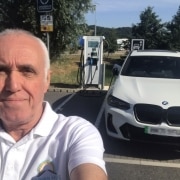
I’d like to tell you about a journey I recently made, from my home is Cheadle Staffordshire to Exeter, a total distance of just over 200 miles, the bulk of it being M6 and M5.

Firstly, a bit of background about my vehicle. It’s a BMW iX3, fully electric, I’m averaging 260 miles on a full charge, however, for most of the time I cap the charge at 80%, to speed up charging and preserve battery health, most manufacturers saying the battery has a sweet spot, between 20% and 80%. The first 20% and the last 20% taking the longest to charge and to be honest, this fits in nicely with my mileage patterns and thinking about it, if I was driving a diesel, would I keep my tank always topped up to full, no, of course I wouldn’t.

So, one of the EV mindsets is to plan a journey, and to do this I use Zap Map, it allows me to view all the charge locations, find out if they are working and what they cost, as well as whether I can pay with my debit card or whether I need a pre-registered card.

It just so happened that the halfway point was at my favourite Motorway Services, Gloucester Services on the M5, they have a small bank of Instavolt chargers, they tend to be the more reliable ones. By the way, if you are on the M5, definitely worth a stop at Gloucester Services, lovely place, excellent food.

Another of an EV driver’s mindset is to maximise range, we do this my being gentle on the accelerator, adopting a slow-to-flow approach wherever we can, which means trying to avoid complete stops, better to maintain a rolling motion rather than continual stop-starts. Then I disabled the aircon after conditioning my vehicle pre-departure while it was connected to my home charger.

I also employed a whole host of other range-extending techniques, I cover these in my online EV course if you are interested, and shock horror, after a 20 minute top up at Gloucester my car predicted the range was 336, it’s maximum range is supposed to be 286 – so employing the right techniques with the right mindset and some EV know-how, we got a massive extension to the range.

Suitably refreshed via a lovely latte and freshly made sandwich, my car app told be my vehicle was topped up and ready to go. On my way back to the charge point I noticed a chap tugging at his charge lead, getting somewhat frustrated. I asked if he was having trouble, after a few expletives I deduced he couldn’t remove the charging cable from his charge port. I suggested he locked and unlocked his car, he said “really”, but much to his amazement, it worked. He didn’t realise that the locking mechanism wouldn’t release unless his vehicle was locked, he’d been charging with his car door open! He only picked his EV up that morning.

Having done my good deed for the day I set off on the second leg of my journey, suspicious that my range would drop like a lead weight and the 336 miles was a blip, but no, it was indeed telling the truth.

Incidentally, another EV mindset with regards to planning is to have a plan A, B, and C. This means planning a second and third location as a charge top-up, just in case of problems with your chosen first destination, another way we EV drivers eliminate range anxiety.

The return journey was much like the outbound leg but in reverse. I planned my A, B, and C charge stop, even though my home was well within the range of my car, however, as a road safety professional it would be remiss of me if I were to not put into practice what I tell all my clients, that is that the Highway Code stipulates a 15 minute stop in ever two-hours worth of driving, this is a good way to combat fatigue, and take advantage of a charge top-up if you need it.

I just thought I’d share this journey with you given that today, 9th September, is ‘World EV Day’, I’d love it if you would share your positive EV journey too, we do hear far too many negative stories about how rubbish the charging infrastructure is and that an EV’s range is too limiting, usually by non-EV drivers I might add. I’m not saying everything is perfect, far from it, but, with the right mindset, driving an EV is an amazing thing to do.

Accora embrace workplace road safety

Background

Accora are a family-run firm based in Cambridge. They supply medical beds and chairs to nursing/care homes and health care facilities throughout the UK.

Challenges Faced

The company has a fleet of vehicles with around 35 sales staff and product specialists who drive for work purposes. They had previously tried various training options for their drivers through the insurance companies they had worked with but found that these were not always consistent.

Wanting to take a more risk-based approach they were introduced to Adrian Hide through a partner company they were already working with.

Requirement

Adrian worked with Accora to assess their specific requirements and to bring in tailored support to achieve their specific objectives.

How We Helped

Adrian carried out a detailed risk assessment on the drivers and journeys undertaken, then produced a Driver Safety Policy which Accora adopted and tailored to fit their house style. Accora use the FleetCheck app and have also designed a module for their CRM system to help manage their fleet more effectively. Driver safety training for staff will be mainly online with face-to-face training for higher-risk drivers.

Quality Manager Anthony Drake said: “We’re a responsible employer so had already started down this road and knew what we wanted – Adrian helped us implement what we needed quickly and effectively.

His expertise and knowledge have been invaluable. He advised us on how to introduce dashcams and telematics to our fleet and as a result, incidents have dropped – meaning our drivers are safer on the roads.

He added: “Our drivers are also more focussed. We have vehicle tracking systems fitted so that driving styles can be analysed, and based on this data we’ve brought in an incentivised league table for our drivers. We’re finding that the drivers compete in a friendly way to be at the top of the league table.

“It’s clear that drivers’ attitude to safety is changing, and we are very pleased with Adrian’s support and guidance to help this programme forward. I would recommend Adrian to any company that is serious about driver safety,” Anthony said.

Road deaths up!

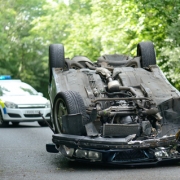
New figures have revealed that the number of deaths on our roads rose by seven percent in 2021. The provisional figures have been revealed in a recent Department of Transport report.

They also show that:

• There was an estimated 1,560 reported road deaths in 2021, a reduction of 12% from the 2017 to 2019 average
• There was an estimated 27,300 killed or seriously injured casualties in 2021, a reduction of 13% from the 2017 to 2019 average
• There was an estimated 127,967 casualties of all severities in 2021, a reduction of 21% from the 2017 to 2019 average
• There were increases in casualties of all severities in 2021 compared with 2020, though pedal cyclists showed a reduction in fatalities (20%)

The report says that the road casualty stats have been impacted by the national Covid restrictions implemented from March 2020. That means the figures above are probably lower than they could have been, because there was less traffic on the roads.

Despite that the numbers are frightening. 1560 roads deaths in one year. That’s 1560 families and friends devastated.

According to the Road Safety charity Brake, 1.35 million people die on the world’s roads every year – the eighth highest cause of death for people of all ages, and the number one killer of those aged between five and 29. More frightening statistics that are difficult to compute.

And we don’t mean to scare you but we don’t want you or your staff to become a road casualty statistic either.

That’s why we do what we do.

Our training courses are designed to keep you and your staff as safe as is humanely possible when driving on the roads. Find out all about our training courses here:

And don’t forget more than a quarter of all road safety incidents are work-related so having a good driver risk management programme in place is really important, I can help you with this too, check out my website for details on how I can help you.

If you are interested, here is a LINK to the full accident stats report.

Pedestrians have priority at junctions

May is: ‘National Walking Month,’ and with the weather getting better – more and more of us are donning our walking gear to get some fresh air and some exercise.

Did you know though that changes made to the Highway Code this year affects pedestrians/walkers? If not our latest blog will help explain.

Back in January something called the Hierarchy of Road Users was introduced to the Highway Code.

The hierarchy places those road users most at risk in the event of a collision (e.g. pedestrians/walkers) at the top of the hierarchy. Having said that it doesn’t remove the need for everyone to behave responsibly including pedestrians.

Before the new rules were introduced drivers had to give way to pedestrians who had started to cross, now the rules go a lot further.

It states that at a junction the motorist should give way to pedestrians crossing or WAITING to cross a road into which you are turning into or from.

In a nutshell:

• The rule applies to drivers entering or leaving a junction
• Drivers will need to anticipate the potential of a pedestrian crossing the road they are entering or leaving
• Don’t leave it too late and make sure you’re aware of the driver behind – if you brake too late you risk having a shunt/prang

Adrian says: “The rules might sound a little confusing but essentially the Code prioritises the safety of vulnerable road users. Not understanding the rules isn’t a defense. It’s important that all road users are aware of the Highway Code and what it means, they’re considerate to other road users and understand their responsibility for the safety of others. Remember, pedestrians are at the top of the hierarchy.”

For more information please go to: https://www.gov.uk/guidance/the-highway-code/introduction

Beware as Councils set to fine drivers

When it comes to getting behind the wheel, we’ve already seen lots of rule changes this year already.

Last month we saw a clampdown on the use of mobile phones while driving and earlier this year we saw real changes to the Highway Code. If you missed it or want to find out more simply click on the text to check out our previous blogs on both subjects.

And now in around six weeks’ time we’re going to see more changes. From June 1st 2022 Councils will actually be given powers to fine drivers for certain traffic offences rather than the Police.

Local authorities across England and Wales will be able to apply for powers to issue penalty charge notices.

It means councils will be able to fine motorists for breaking certain rules including:

Currently, these kinds of offences, outside of the English and Welsh capitals are managed by the police but not always enforced. We are told the aim of this change is to improve road safety and cut congestion.

Under the new powers councils could issues drivers with fines of up to £70 for offences which are likely to be reduced if they’re paid within a certain time limit.

Petrol & Diesel – “the only way is up…”

Over the last few weeks and days the media has been full of stories about rising petrol and diesel prices.

Only today there are headlines saying that petrol and diesel costs have reached a record high as global oil prices soar yet again.

According to the RAC the average price for unleaded is £1.67 a litre and it’s worse news if you’re filling up with diesel as that’s risen to an average of a whopping £1.78.

Most businesses run diesel vehicles, so it’s bound to hit their operating costs. And with rising fuel bills, council tax increasing and inflation on the up that all means one thing – less money in our back pockets.

Tuning your heating down, or off, using your washer and tumble dryer less can all make a small difference to the energy you use, but is there anything we can do to save on the amount of fuel we’re using.

With prices predicted to reach a staggering £2.50 per litre, we thought we’d give you a few tips – and drivers who adopt fuel-efficient driving styles can save between 8% and 15% of fuel. Bet you’re reading on now:

  • Use the vehicles ‘stop-start,’ technology, or switch the engine off when you’re waiting for long periods, at traffic lights or a railway crossing for example.
  • Don’t carry unnecessary weight in the boot (do you need all that equipment for this particular journey?)
  • This might sound odd but unless you need to, don’t fill your tank right up, fuel is heavy!
  • Try and avoid repeated stop-starts, anticipate the road situation, and adopt a ‘slow-to-flow,’ style of driving and by that we mean, swapping ‘jerky,’ for ‘smooth,’
  • This one’s obvious but is worth remembering, the higher your speed, the more fuel you burn – take your foot off the gas. Driving at 60mph rather than 70mph reduces fuel consumption by around 20%!
  • Keep your tyres at the correct pressure, underinflated tyres can increase the amount of fuel you use.
  • Avoid travelling at peak traffic times if you can, you are more likely to waste fuel in queues – waiting half an hour and avoiding the rush hour or school run traffic can make a difference.
  • Develop a ‘light right foot,’ easy on the accelerator and brake, makes for better fuel efficiency.

Businesses should also think about considering driver training. Why?

  • Did you know there’s a legal duty to train staff under health and safety law?
  • It demonstrates an investment in staff safety and they’ll learn much more about driving safely and efficiently, helping you keep staff safe and they can help you save money as well.
  • Like we said before – drivers adopting fuel-efficient driving styles can save between 8% and 15% of fuel.

Our Eco-Safe driving course for car drivers, or our Safer Van Driving course for van drivers contains a wide range of safety and fuel-efficient driving tips. To find out more about our courses please click on this LINK or drop us an email at adrian@adrianhideconsultancy.co.uk

Get in touch

Together, we can make the roads safer for everyone

Call us on 07973 337 251
Email us at hello@adrianhideconsultancy.co.uk

Safer Driving Academy is the training division of Adrian Hide Consultancy

Get in touch

Together, we can make the roads safer for everyone

Call us on 07973 337 251
Email us at hello@adrianhideconsultancy.co.uk

Contact us Privacy Policy

Safer Driving Academy is the training division of Adrian Hide Consultancy

© Copyright Adrian Hide Consultancy | Safer Driving Academy is the training division of Adrian Hide Consultancy | Website by Clyq

Contact us Privacy Policy

© Copyright Adrian Hide Consultancy | Safer Driving Academy is the training division of Adrian Hide Consultancy | Website by Clyq